In Episode 13, we opened up about the physical limitations of NFC that we uncovered by analyzing differences in customer reviews across Japan and the U.S., as well as our hands-on efforts to completely overhaul the user experience.
After 14 installments, the EZ Sign Story is finally coming to a close.
But this isn't the end of our journey—it’s simply the end of one chapter.
Our commitment to engineering, continuous product improvement, and the development of new lineups remains stronger than ever.
In this final installment, we want to share some of the engineering challenges we're currently tackling and give you a glimpse of where EZ Sign is headed next.
It’s Not "Just" a Case: Crafting Accessories Without Compromise
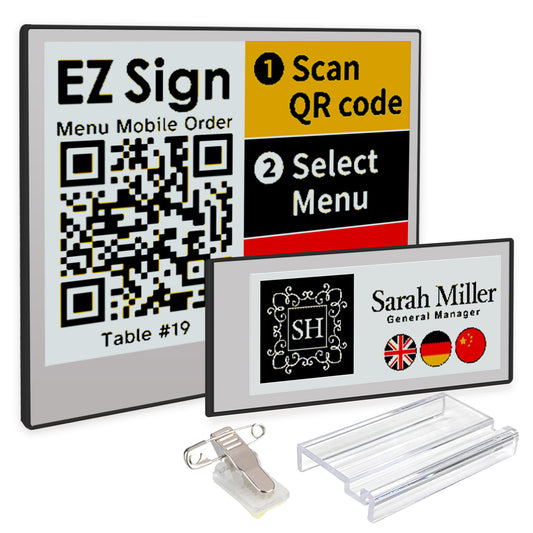
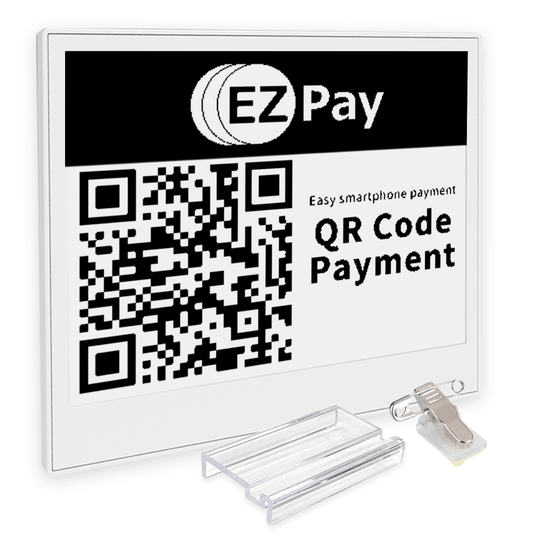
Currently, each EZ Sign comes bundled with a dedicated custom stand and clip, with a lanyard available as an optional add-on.
However, we received overwhelming feedback from our community: “I want to attach it to more places,” and “I need a protective case, so it won't break if dropped.”
To unlock even more real-world use cases, we moved quickly to develop keychains, key holders, dedicated mounting frames, and flexible TPU protective cases—similar to the soft smartphone covers we're all familiar with.
Yet, engineering these accessories proved far trickier than we anticipated.
Take the TPU case, for example. It looks like a simple soft slip-on cover, but inside EZ Sign sits an extremely delicate assembly: an ultra-thin glass substrate (EPD panel) paired with a long, narrow driver IC.
We discovered that if the device flexed even slightly while a user was snapping the case on or off, it risked cracking the fragile internal glass or damaging the chip.
On top of that, tight contact between the soft case and the display surface created visual blemishes known as “rainbow effects” or Newton’s rings.
None of these challenges were easy to overcome. But our entire team refuses to settle until we deliver a product we can truly stand behind.
Relentless Craftsmanship Across Japan, the U.S., and China
To maintain this pace of continuous improvement, I personally travel between the U.S., China, and Japan around 10 times a year, working directly on the ground to refine EZ Sign at every step.
Our experienced Japanese engineers also spend extensive time on-site at our manufacturing facilities in China. Last year, while launching EZ Sign NFC, several of our engineers spent nearly half the year working side by side with the factory team.
Overcoming language and cultural barriers, debating every detail, and refining each “magic” display—this hands-on approach to engineering is one of Santek’s core strengths.
Beyond engineering, we’ve actively expanded our global outreach, exhibiting at major trade shows and industry exhibitions in Japan, the U.S., and China more than 10 times a year.

Being More Colorful: Pushing the NFC Boundary

We constantly receive passionate requests from EZ Sign users: “We want larger sizes!” or “Can you make a 6-color model that can display vibrant blues and greens?”
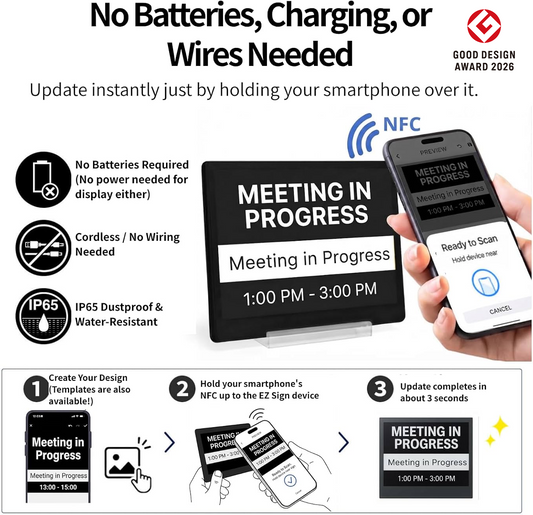
We wanted to deliver on these expectations as quickly as possible. But here, too, we hit a major physical barrier: the inherent limits of NFC technology.
As display size and color depth increase—from 2-color to 4-color and eventually 6-color—the amount of image data required increases dramatically.
Even with our current flagship 4.2-inch 4-color model, drawing power through NFC, transmitting the image data, and driving the internal microcapsules during the display refresh process takes about 25 to 30 seconds.
If the transmission time becomes much longer, users naturally tend to move their phones, increasing the chance of connection errors. Furthermore, smartphone NFC hardware wasn’t originally designed for high-volume data transfer over extended periods, leading some phone manufacturers to enforce strict session timeouts for continuous NFC activity.
Our Next Move: Upcoming Lineup Additions
While large-screen NFC color displays are on hold for now, our momentum hasn’t slowed down. In addition to our 7.5-inch 2C model planned for Q4 2026, we are actively developing several exciting new form factors:
In parallel, to meet the demand for larger, multi-color E-Paper displays, we are conducting R&D into display concepts that move beyond our purely battery-free NFC architecture. Engineering design, prototyping, testing, and iteration all take time, but we will share confirmed release dates and development milestones on our official website, social media channels, and blog as each product nears completion.
A Final Note of Gratitude
Thank you so much for following our 14-part development journey from beginning to end.
What began with two simple goals—“Eliminate paper waste” and “Solve real-world workplace friction using smart technology”—fueled by the early excitement of crowdfunding in Japan and the U.S., has grown into a product line shipped to customers around the globe.
To everyone who purchased an EZ Sign, and to everyone who followed this series: your support gave us the strength to push past every technical hurdle. We offer our deepest, most sincere gratitude.
The story of EZ Sign isn’t over—it will continue to evolve. We hope you’ll stay with us and continue to follow our journey as we take on new challenges.